
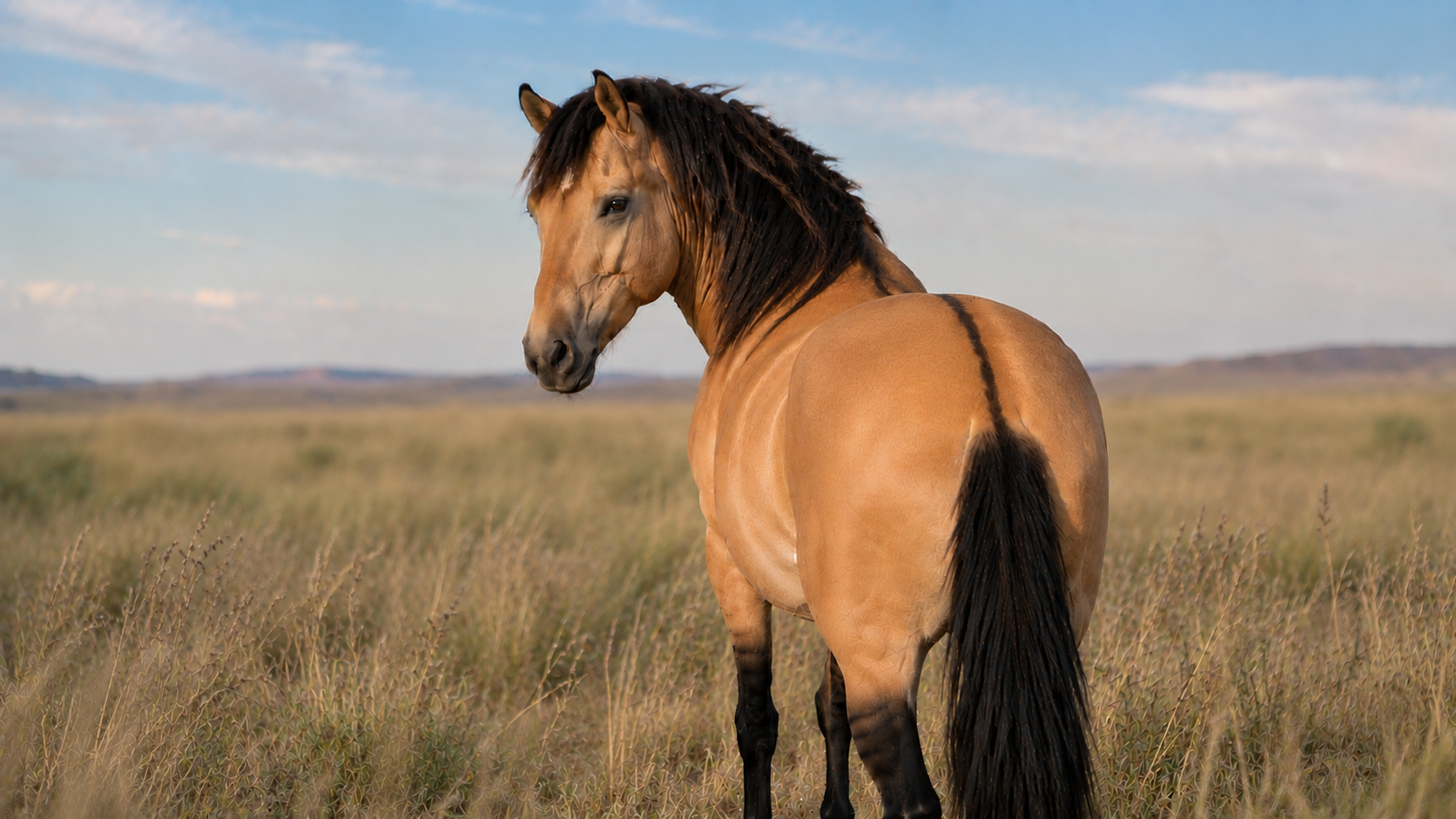
Bay Dun: the root of all colour
Every coat colour a horse can be traces back to a single starting point. The ancestral wild horse wasn't black, or chestnut, or grey — it was bay dun: a red body with black points, wearing the dun camouflage of a dark dorsal stripe, barred legs, and a coat lightened just enough to vanish against open ground. That horse, painted on cave walls and still alive in breeds like the Przewalski's horse, is where every modern colour begins.
The surprise is which part is original. Most people assume the plain, solid colours came first and dun was added later. It's the other way round. Dun is the wild type — the default. The lightening and the primitive markings were the starting condition, and the solid colours we treat as “base” today are what appeared when that ancient camouflage was lost. In the wild, standing out meant being seen by predators; under human care, those new colours were kept and prized precisely because they were rare and striking.
From that one root, every colour is built by answering a short series of questions. The first is the most important: can this horse make black pigment, or only red? That single switch — the extension gene — divides every horse into two great families before anything else happens. If black is possible, a second gene — agouti — decides where it sits: restricted to the points, giving bay, or spread across the whole body, giving black. Only once that base is set do the modifiers come into play — dilutions that lighten the coat, genes that scatter white hairs through it, and the slow silvering of grey.
What's remarkable is how few genes do all this. A handful of switches, each simply on or off, dominant or recessive, combine to produce the thousands of shades a horse can be. This page takes them one at a time. Start with the terms, then work through each gene — and you'll be able to read any horse's colour as the sum of a few clear decisions, all built on the same bay dun foundation.
Coat-colour genetics on this page follow established equine genetics research and standard references.